Why is Río Celeste Blue? (And Will It Be Blue If It Rains?)
2026-08-05 · 7 min read
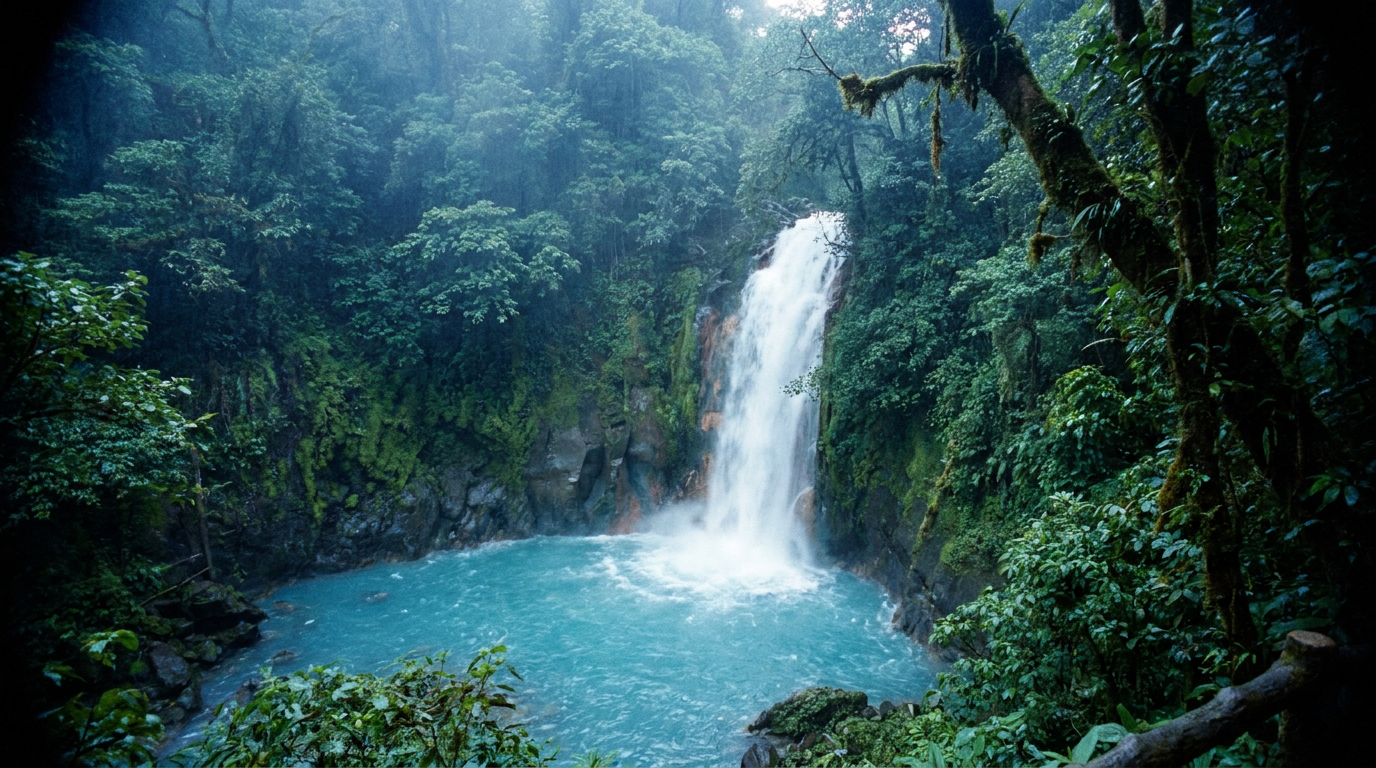
Río Celeste's famous turquoise color comes from an optical illusion caused by sunlight scattering off minerals suspended in the water. During very heavy, prolonged rain, common in our green season, the river can become diluted with sediment and temporarily turn brown. However, the color often remains, or quickly returns, especially if you visit in the morning before afternoon showers.
One of the most frequent questions we get from guests planning a day trip is about Río Celeste. Its almost impossibly blue water is legendary, but what happens when you visit during the green season? We love this question because it gets to the heart of traveling in Costa Rica: embracing nature as you find it. Here’s our guide to understanding this natural wonder and planning your visit, rain or shine.
The Science Behind the Sky-Blue River
First, let's clear up a common misconception. The water in Río Celeste isn't actually blue. If you were to scoop it up in a bottle, it would look perfectly clear. The magical color is an optical phenomenon, a bit like the science that makes the sky appear blue.
It all happens at a specific point on the river called Los Teñideros, or “The Dyers.” Here, two clear rivers, the Río Buenavista and the Quebrada Agria, converge. The Quebrada Agria (“Sour Creek”) is highly acidic due to volcanic activity. The Río Buenavista carries a high concentration of aluminosilicate particles, a type of mineral.
When these two rivers mix, the change in acidity causes the aluminosilicate particles to clump together and enlarge. These suspended particles then perfectly reflect sunlight in a way that our eyes perceive as a brilliant turquoise. It’s a process called Mie scattering, and it’s a breathtaking sight to witness where the two clear streams merge and instantly create a new, vividly colored river.
What Happens to Río Celeste When It Rains?
This is the million-dollar question for anyone visiting between May and November. The answer depends entirely on the intensity and duration of the rain.
Light Rain or Passing Showers: A typical green season shower that lasts for an hour or so will have almost no effect on the river's color. The forest canopy absorbs much of the water, and the river's flow isn't altered enough to disrupt the mineral concentration.
Heavy, Sustained Rain: If there has been a tropical storm or several hours of torrential downpour (what locals might call a baldazo), the story changes. The massive influx of rainwater and runoff from the surrounding land can overwhelm the river system. This surge of water carries a lot of mud and sediment, diluting the crucial aluminosilicate particles. When this happens, the Mie scattering effect is diminished, and the river can turn a milky light blue or even a muddy brown.
Our Tips for Visiting During the Green Season
Visiting Río Celeste during the green season is one of our favorite things to do. The rainforest is at its most vibrant, the air is fresh, and the crowds are often smaller. You just need to plan a little smarter.
Go Early in the Morning: This is our most important tip. The park opens early (early in the morning). Be one of the first ones there. Weather patterns in Costa Rica, especially in the highlands, often mean clear mornings with rain building up in the afternoon. An early start gives you the best odds of seeing that iconic blue.
Don't Trust the Weather App: A forecast showing a thunderstorm icon for La Fortuna or Bijagua doesn't mean your day is a bust. Those predictions often refer to the likelihood of an afternoon shower, not an all-day washout. The weather in the mountains is localized and changes fast.
Embrace the Mud: The trail inside Tenorio Volcano National Park is a proper jungle trail—uneven, full of roots, and, during the green season, very muddy. See it as part of the adventure! The mud is why proper footwear is non-negotiable.
The Hike: Waterfall, Blue Lagoon & Bubbling Pools
The trail at Río Celeste is an out-and-back route that leads you to several incredible sights. It begins as a relatively flat path before becoming more challenging.
The Waterfall (Catarata): The first major stop is the breathtaking waterfall. After about 1.5 km of hiking, a long, steep staircase of about 250 steps leads you down to a viewing platform at its base. The power and color here are simply stunning.
The Blue Lagoon (Laguna Azul): Further up the main trail, you'll reach a calm section of the river with intensely blue, tranquil water. It's a perfect photo spot.
The Bubbling Pools (Borbollones): You'll see and smell this spot before you arrive. Here, geothermal vents release sulfurous gases, causing the river to bubble as if it's boiling.
The Dyers (Los Teñideros): This is the end of the trail and the scientific heart of the whole phenomenon. You'll see a rope across the river where the two clear tributaries meet, creating the blue color right before your eyes.
What to Pack for a Rainy Day at Río Celeste
Being prepared makes all the difference between a muddy slog and a fantastic jungle adventure. For a more complete list, check out our guide on what to pack for Costa Rica's green season, but for this specific day trip, don't leave without these items.
- **Sturdy Hiking Shoes:** Closed-toe, waterproof, with excellent grip. Do not attempt this in sandals or flimsy sneakers. You can often rent rubber boots near the park entrance, which is a great option.
- **Rain Jacket or Poncho:** A lightweight, breathable rain jacket is essential.
- **Insect Repellent:** The jungle is full of life, including bugs.
- **Water and Snacks:** There are no shops once you're on the trail.
- **A Change of Clothes:** Having dry clothes and shoes to change into back at the car is a wonderful feeling.
- **Waterproof Bag:** Keep your phone, camera, and wallet dry.
Is the Trip Worth It If the River Isn't Blue?
In our honest opinion, yes. While the blue water is the main draw, Tenorio Volcano National Park is a spectacular primary rainforest. The hike itself is a journey through a world of giant trees, exotic plants, incredible fungi, and the sounds of the jungle. You might spot monkeys, toucans, or the electric-blue Morpho butterfly.
The geothermal "Borbollones" and the fascinating "Teñideros" are still amazing natural features to witness, regardless of the river's color. If you're trying to decide how to spend your time, our guide comparing La Fortuna Waterfall vs. Río Celeste can help you choose the right adventure for your group.
The rainforest itself is so overwhelmingly beautiful that the river's color feels like a bonus, not the only reason to go.
Ultimately, a trip to Río Celeste is about more than just a single color. It’s an immersion in one of Costa Rica's most vital and beautiful ecosystems. Driving there from Casa Venado is straightforward, and our guide to a self-drive day trip to Río Celeste covers all the logistics. Just be sure you have the right vehicle; we have a whole post on if you need a 4x4 for the area.
So, if you wake up to gray skies, don't be discouraged. Pack your rain gear, head out early, and go have an adventure. You might be rewarded with that magical blue after all.
We're always here to help you check the latest conditions or arrange transportation. Just let us know!
Common questions
- Can you swim in Río Celeste?
- No, swimming is strictly prohibited inside Tenorio Volcano National Park to protect the unique mineral balance. We are happy to point you to some wonderful local swimming holes near Casa Venado for after your hike!
- How long is the hike at Río Celeste?
- The full trail is about 6 kilometers (3.7 miles) round trip and takes 3-4 hours, especially if it's muddy. A shorter hike just to the waterfall viewpoint and back takes about 1.5 hours.
- Is Río Celeste better than La Fortuna Waterfall?
- They're very different! Río Celeste is a longer jungle hike to a unique blue river, while La Fortuna Waterfall is a powerful cascade you can swim near. We wrote a guide comparing them to help families choose.
- Do I need a guide for Río Celeste?
- A guide is not required, as the trail in Tenorio Volcano National Park is well-marked. However, a local guide is fantastic for spotting wildlife like sloths, frogs, and birds that you would almost certainly miss on your own.
- How far is Río Celeste from Casa Venado?
- The entrance to Tenorio Volcano National Park is a scenic one-hour drive from our front door. This makes it a perfect, easy day trip during your stay with us.